04 / Robotic intervention
Robotic Pipe Cutting
Assess targeted robotic treatment for protrusions, local obstructions or lateral openings covered during lining. Combining camera-based positioning, tool selection and follow-up inspection helps define the work and document the result without treating every obstruction as the same problem.
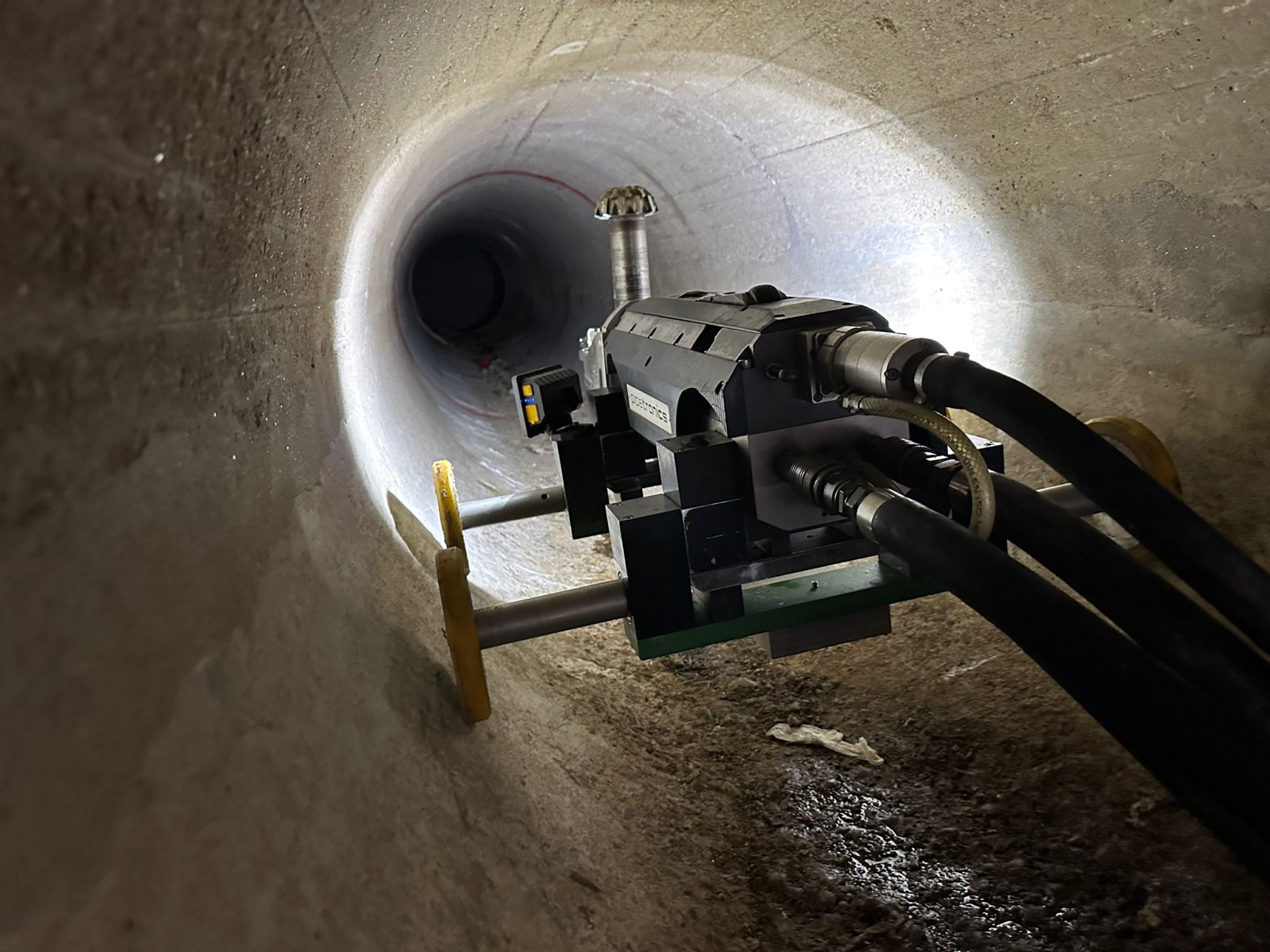
Applications
Assessment of protrusions and local obstructions inside pipes
Reopening of lateral connections after lining
Local obstruction removal ahead of rehabilitation
Selection starts with the obstruction material, pipe wall condition, internal diameter, bends and equipment access. Robotic cutting is not a repair for every structural defect. Unstable pipework or an unclear target may require further investigation or a different approach before removal is considered.
Delivery approach
Inspect and locate
Use available footage to establish the target, its shape and the surrounding pipe condition before defining the treatment area.
Select the approach
Assess the tool configuration against material, diameter and access, and coordinate the associated cleaning and site arrangements.
Plan targeted treatment
Carry out the agreed remote intervention with camera observation and any necessary adjustments to the planned sequence.
Clean and review
Arrange the agreed debris removal and follow-up inspection, then record the condition of the target and any relevant connections.
Planning & records
Records to agree during planning
- Treatment locations and scope agreed for the project
- Work records specified in the project arrangements
- Before-and-after imagery within the commissioned scope
- Remaining pipe-condition issues or rehabilitation needs
Useful information for an enquiry
- Footage and location of the obstruction or protrusion
- Internal diameter, material and route details
- Lateral locations and any existing lining
- Access, flow conditions and working-hour constraints
The scope, testing methods, record formats and acceptance criteria are agreed against site findings, client or consultant requirements and the contract.
Common questions
Does removing an obstruction complete the pipe repair?
Not necessarily. The intervention addresses the specified obstruction or opening. Cracks, leakage or other pipe defects may still require a separate rehabilitation assessment.
Can a cutting robot enter any pipe?
The equipment needs suitable access and travel space. Actual internal diameter, bends, deformation, water levels and obstructions can limit both entry and operation.
Related services
Start with the conditions on site.
Share the location, pipe dimensions, operating use and available inspection records to discuss the next step with our engineering team.